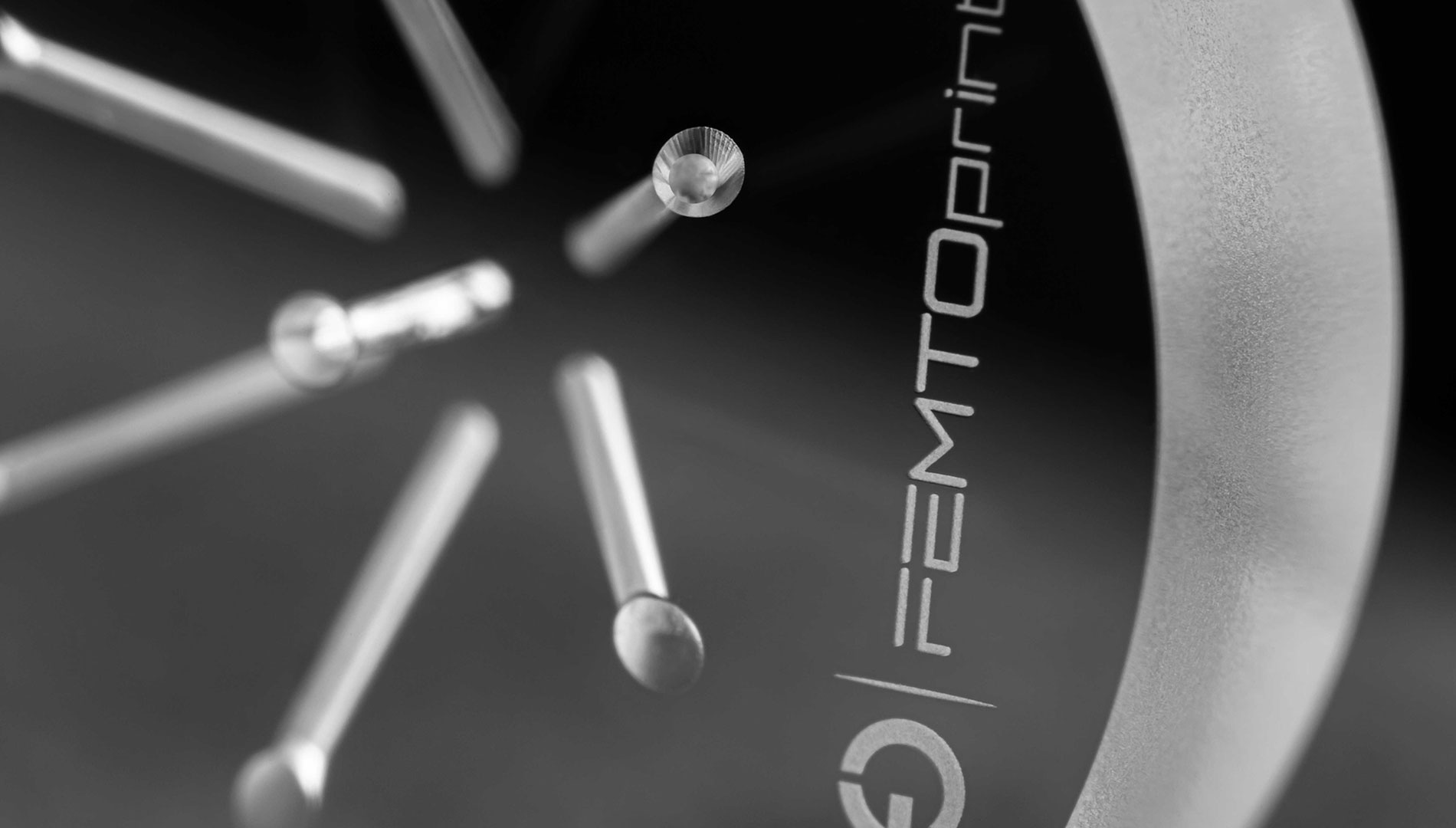
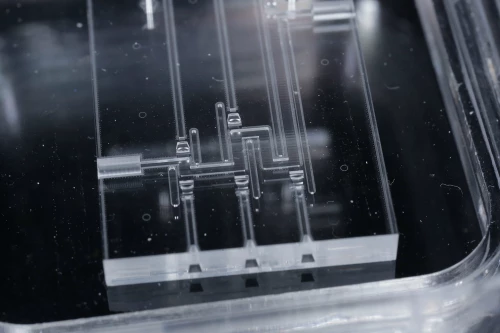
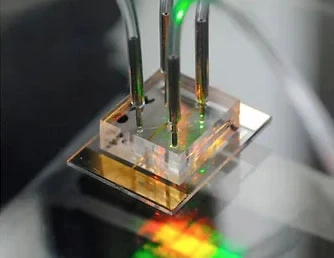
Glass offers superior dimensional stability, exceptional thermal durability, and high optical-grade clarity. Unlike polymers, glass does not suffer from aging, yellowing, or significant thermal expansion, ensuring consistent performance in high-precision applications.
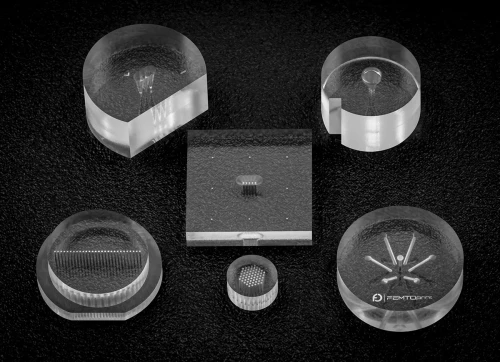
Our platform can fabricate a wide range of components, including micro-lenses, micro-mirrors, and micro-prisms. We specialize in geometries ranging from standard spherical and aspherical designs to fully freeform optics, all achieved with sub-micron accuracy.
By combining our core laser etching with specialized post-processing, we can achieve a surface roughness (Ra) below 10 nm. This level of finish is ideal for high-performance optically active surfaces, ensuring minimal scattering.
Yes. One of our key advantages is the ability to include precise alignment features, mechanical mounts, and fiducials within the monolithic glass block, facilitating seamless integration and perfect alignment in multi-component systems.
Fused silica is our primary material of choice due to its high transmission range (UV to NIR), excellent thermal stability, and low autofluorescence. We also process other high-quality glasses tailored to specific optical requirements.
Absolutely. Our glass components are fully compatible with Anti-Reflective (AR), reflective, and metallic coatings to enhance transmission, manage light reflection, or provide electrical functionality.
We can achieve shape accuracy within ±1 µm, reaching sub-micron precision for specific geometries. This ensures that every optical element performs exactly as simulated during the design phase.
Glass maintains its optical and mechanical properties under extreme heat and UV exposure, where most polymers would degrade, deform, or lose transparency. This makes glass essential for aerospace, automotive, and high-power laser applications.
Yes. Our wafer-level processing enables the transition from rapid prototyping to high-volume manufacturing, allowing for the cost-effective production of thousands of identical optical components with repeatable quality.
We can realize any geometry from 2.5D to complex 3D shapes. Feature sizes can range from tens to hundreds of microns, allowing for extreme miniaturization without sacrificing optical performance.
Contact us. Discover more.
Explore our Optics applications: Micro-Optics, Miniaturized Optics, and Micro-Optical Elements.