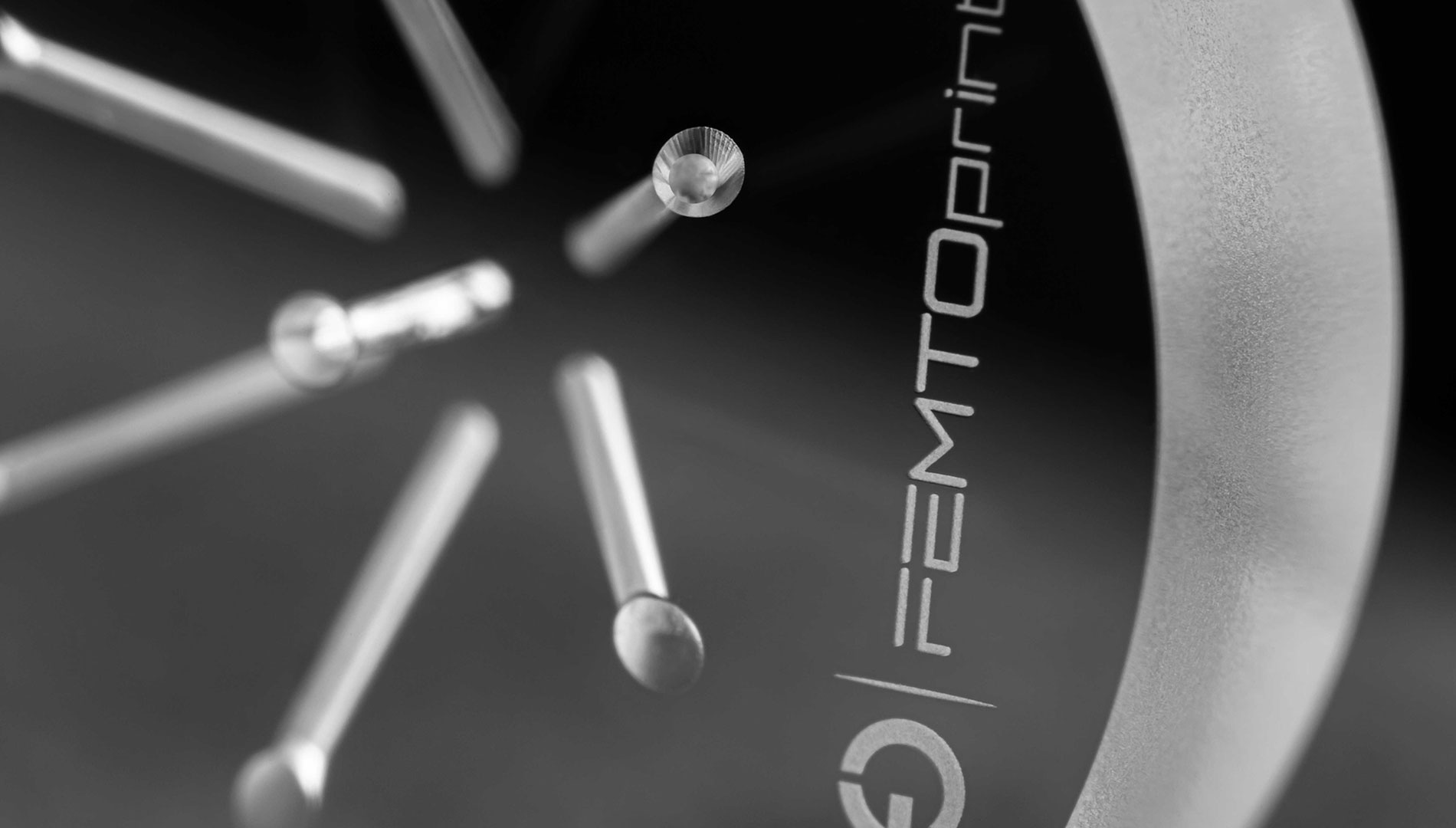
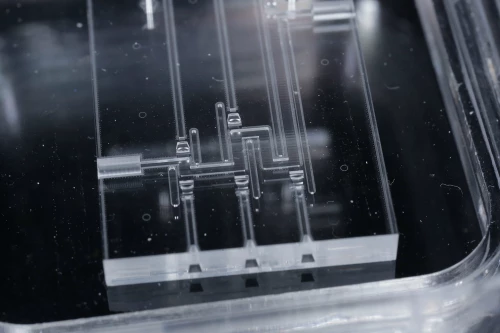
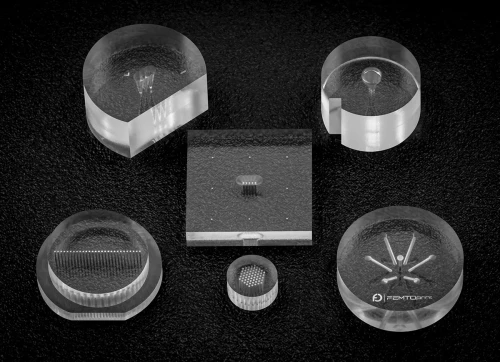
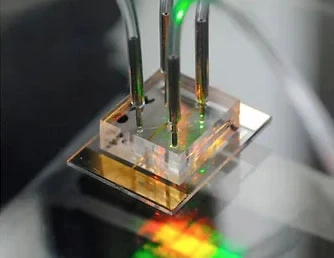
3D glass microfabrication offers exceptional precision, absolute transparency, and unparalleled design freedom. It enables the creation of intricate, free-form 3D geometries that inspire new levels of creativity, allowing designers to move beyond the constraints of traditional machining.
Fused Silica and Borosilicate glass (BF33) are the preferred choices. They offer exceptional optical clarity and durability. Both materials can be processed to achieve flawless, mirror-polished finishes, making them ideal for both decorative elements and functional movements.
Our femtosecond laser technology can create precise surface microstructures that manipulate light. This allows for the creation of unique light-diffusing, holographic, or matte reflective effects that are impossible to achieve with chemical etching or mechanical tools.
Yes. Technical glass provides superior hardness and wear resistance compared to polymers, brass, or traditional alloys. It maintains its pristine appearance over time, resisting the micro-scratches that often dull other materials.
Yes. Sub-surface laser engraving allows for permanent, high-resolution branding and patterns to be captured inside the bulk of the material. This creates a "floating" effect that is protected from external wear and impossible to counterfeit.
We achieve micrometer-level resolution and 3D shape accuracy down to ±1 µm. This ensures that even the most delicate decorative features integrate flawlessly with other high-precision watch components.
Absolutely. We specialize in hybrid assemblies. Glass can be combined with gold, platinum, or steel using advanced laser welding, bonding, or precision mechanical inserts, creating seamless transitions between heterogeneous materials.
Yes. Since our digital laser process is maskless and software-driven, it is perfectly suited for mass customization. We can produce individualized designs or numbered series at scale without the need for expensive new tooling.
Technical glass possesses exceptional thermal stability. It can endure significant temperature changes without deforming, melting, or losing its refractive index, ensuring the chronometric precision of the movement is never compromised.
We offer a range of high-end finishes, from optical-grade polishing to sophisticated matte textures. These can be combined with anti-reflective (AR) coatings and metallic depositions to enhance the luxury appeal and readability of the timepiece.
Yes, significantly. Fused silica is approximately twice as light as sapphire and four times lighter than brass. This provides a massive advantage for mobile components: for instance, glass watch hands reduce energy consumption and inertia, directly extending the power reserve of the caliber.
Talk with our expert today and discover more.
Explore our Watchmaking applications: Dials, Hands, and Wheels.