Unlocking Cellular Heterogeneity, One Cell at a Time
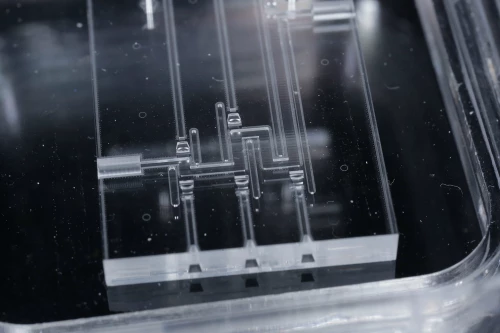
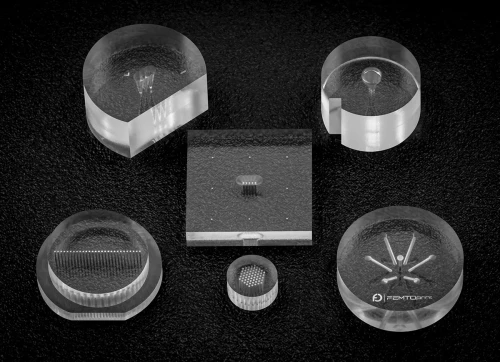
Single-cell research demands micron-scale features and optical transparency to capture and analyze individual cells with high fidelity. Isolating and analyzing single cells demands ultra-precise microstructures with minimal dead volume. Our micromanufacturing technology delivers ultra-fine 3D structures with embedded fluidics, waveguides, and chambers in one monolithic glass chip.
We solve:
You gain:
Glass microfluidic chips enable single-cell capture, isolation, sorting and optical interrogation for genomics, transcriptomics and drug-response studies, where micron-scale features and optical transparency are critical.
Why glass for single-cell analysis devices?
Glass combines high optical clarity, low autofluorescence and precise micron-scale channels, enabling accurate capture and imaging of individual cells.
Can trapping structures be integrated with optics?
Yes. Cell-trapping microstructures can be integrated with micro-lenses and waveguides in one glass chip for combined manipulation and detection.
Related life sciences applications: Discover more femtosecond laser glass micromachining solutions for life sciences, including Diagnostics, Cell Therapies, and Antibody Isolation.