While medical-grade polymers have long been the industry standard for rapid prototyping and low-cost disposables, a paradigm shift is underway. Engineers are increasingly turning to Fused Silica (Glass) to overcome the physical and chemical limitations of plastics.
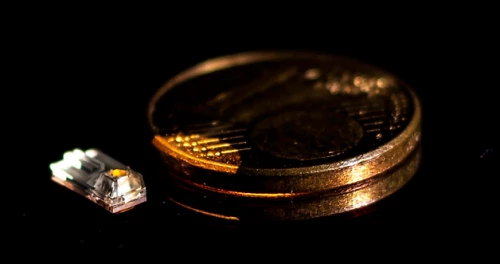
As medical devices become smaller, smarter, and more integrated, the demand for high-performance materials has never been greater. Here are the 5 critical reasons why Fused Silica—processed with advanced 3D microfabrication—is becoming the new gold standard for MedTech innovation.
1. Unmatched Biocompatibility and Chemical Inertness
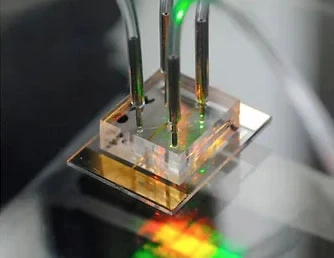
Unlike many polymers, Fused Silica is intrinsically biocompatible and chemically stable. It does not leach plasticizers or react with aggressive reagents used in diagnostic testing. For Lab-on-a-Chip (LoC) applications and implantable sensors, glass provides a pristine environment that ensures the integrity of biological samples, leading to more accurate and repeatable results.
2. Superior Optical Clarity for Diagnostics
Many modern medical breakthroughs rely on photonics and optical sensing. While some plastics offer transparency, they often suffer from autofluorescence or degradation over time. Fused Silica offers a wide transmission range—from UV to Infrared—with zero background noise. This allows for the integration of high-precision lenses and waveguides directly into the device, essential for real-time molecular diagnostics.
3. Sub-Micron Precision and High Aspect Ratios
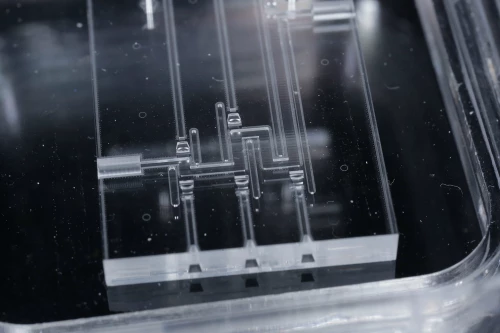
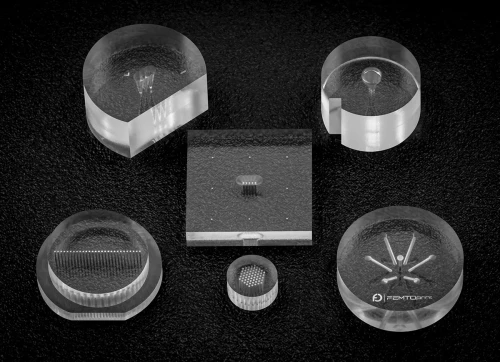
Polymer-based 3D printing often hits a "resolution wall." When designing surgical micro-tools or complex microfluidic networks, precision is non-negotiable. Using Femtosecond Laser Micromachining, Fused Silica can be sculpted with sub-micron accuracy. This technology enables the creation of high aspect ratio features (deep, narrow channels and holes) that are physically impossible to achieve with injection molding or standard SLA printing.
4. Exceptional Thermal and Dimensional Stability
Medical devices often undergo rigorous sterilization processes, such as autoclaving or Gamma irradiation. Polymers can warp, shrink, or lose structural integrity under high heat or pressure. Fused Silica has a near-zero coefficient of thermal expansion, ensuring that a device’s micro-features remain perfectly calibrated regardless of environmental stress.
5. Monolithic Integration: The End of Leaky Assemblies
Traditional microfluidic devices made of plastic require bonding multiple layers together, creating potential failure points and leaks. Fused Silica allows for monolithic integration. Complex internal architectures, sensors, and optical paths can be fabricated within a single, solid block of glass. This "all-in-one" approach reduces assembly costs, eliminates the need for adhesives, and significantly increases device reliability.
Engineering the Future in Glass.
The transition from polymers to Fused Silica isn't just a change in material, it’s an upgrade in capability. For MedTech companies aiming for ISO 13485 compliance and market-leading precision, the choice is becoming clear.
At FEMTOPRINT, we specialize in bridging the gap between complex design and industrial reality through our unique 3D glass microfabrication process.
Book a free call with our expert.
Nature - Scientific Reports Microfluidic chip materials as a factor in cell culture and analysis
NIST (National Institute of Standards and Technology) Corning 7980 Fused Silica Data Sheet