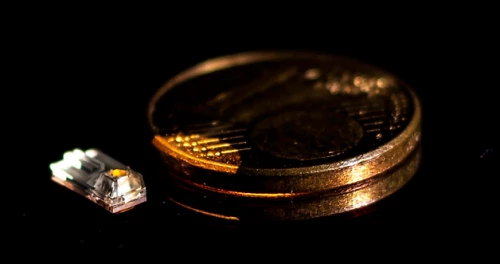
Traditionally, silicon and polymers dominated the tech landscape. However, the unique demands of quantum computing and sensing, which require extreme thermal stability, optical transparency, and sub-micron precision are shifting the focus toward glass microproduction.
Glass is no longer just a fragile substrate; it is a high-performance engineering material. Through advanced 3D micro-manufacturing, glass is now being used to create the complex "highways" for photons (waveguides) that power quantum processors.
Superior Optical Clarity: Essential for preserving photon states over long distances.
Cryogenic Resilience: Glass maintains structural integrity at near-absolute zero temperatures, unlike many polymers.
Chemical Inertness: Prevents contamination in sensitive quantum sensors.
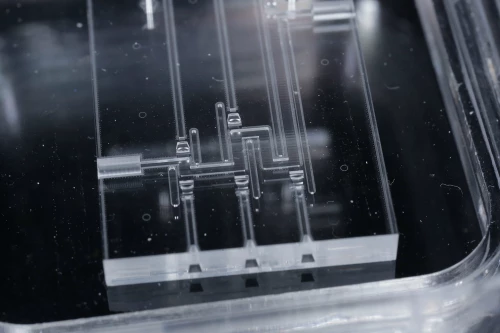
3D Design Freedom: Techniques like Selective Laser Etching (SLE) allow for internal structures that were previously impossible to manufacture.
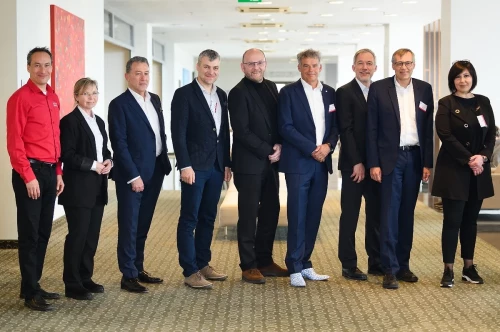
A key figure in this transition is Cesare Alfieri, Prototyping Manager & Business Developer Quantum at FEMTOPRINT SA. Cesare will be a featured speaker at the upcoming EPIC (European Photonics Industry Consortium) meeting on Photonics for Quantum Industry.
His talk will bridge the gap between academic lab research and scalable quantum solutions, demonstrating how precision photonics and 3D micro-manufacturing are shaping the next generation of quantum hardware.
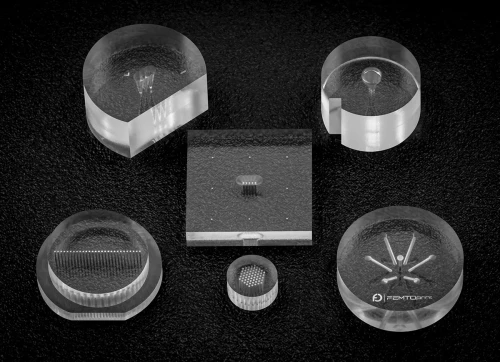
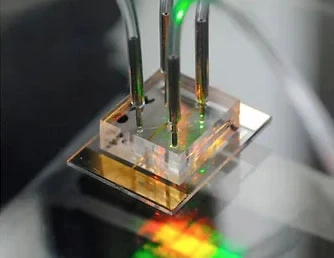
Glass microproduction is used to create high-precision optical components and 3D internal waveguides. These structures are essential for routing photons within quantum chips, providing the low-loss environment necessary for quantum entanglement and computation.
Traditional 2D etching (like that used in semiconductors) is limited to surface patterns. 3D micro-manufacturing (such as Selective Laser Etching) allows for the creation of internal channels, curved paths, and complex 3D geometries inside a solid block of glass, enabling more compact and powerful quantum devices.
Precision photonics allows for the miniaturization of optical setups. By integrating lasers, detectors, and waveguides onto a single glass chip (Photonic Integrated Circuits), the industry can move from bulky lab experiments to mass-producible quantum sensors and computers.
As Cesare Alfieri and the team at FEMTOPRINT demonstrate, the leap from theory to reality in the quantum ecosystem depends on our ability to manipulate light with unprecedented precision. The future of quantum isn't just bright, it's transparent.
Don't miss the insights from Cesare Alfieri on the frontiers of the quantum ecosystem.