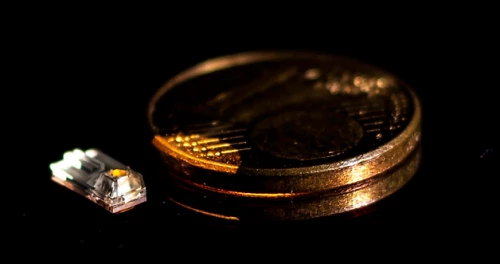
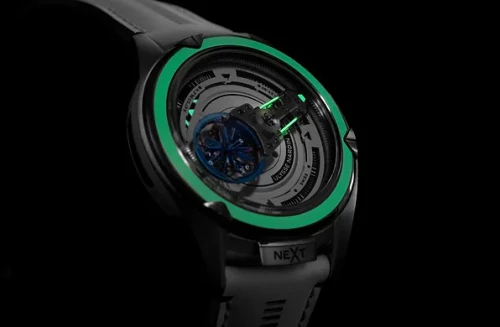
Before anyone schedules the technical deep-dive, you're really asking one question: can this supplier hold the numbers when the volume is real?
Four things tell you the answer fast.
Can a micro-fabrication supplier hold tolerances at volume?
Only if the same process and the same facility run both the prototype and the production lot. Single-source vertical integration removes the vendor-to-vendor handoffs where tolerance and surface finish drift. At FEMTOPRINT, parts hold XY ±1 µm, Z ±2 µm and Sa <10 nm (after surface treatment) at prototyping and at wafer-scale production alike.
The four checks that come before the technical conversation
Procurement leads tend to screen on the same short list, in roughly this order, because each one is a proxy for risk you can't easily see in a quote.
ISO 13485 and ISO 9001 aren't badges. They're the difference between a supplier who can show you a traceable, documented quality system and one who can't. For regulated programs, medtech especially, an uncertified source is a non-starter no matter how good the parts look. FEMTOPRINT carries both, and runs them across the same facility that does the actual fabrication.
A lot of "manufacturers" are really integrators stitching together a glass supplier, a laser shop, a polishing house and a metrology lab. Every seam is a place where responsibility blurs and the spec loses a little resolution. Vertical integration means one party owns the chain from material in to inspected part out, and one party you call when something moves.
"Swiss" is shorthand, but it points at something concrete: a 12+ year production track record, parts shipping into 35+ countries, and the kind of process discipline that keeps lot 1,000 identical to lot 1. The EPHJ Grand Prix des Exposants, which the company has taken three times (2015, 2019 and 2025), is an industry vote on that consistency, not a marketing line.
Per-unit price matters, but the cost that actually hurts is the hidden one: re-qualification, scrap, a second source you had to spin up because the first couldn't scale. Pricing per piece on a process that doesn't drift is usually cheaper across the program than a lower headline number that costs you a re-validation.
Why specs drift between prototype and production
Here's the part most quotes won't tell you. The prototype and the production part often travel different roads.
A prototype gets attention. A senior process engineer babysits it, tweaks parameters by hand, re-runs the tricky feature until it's perfect. None of that survives a scaled run. When volume arrives, the part moves to a production line, sometimes a different machine, sometimes a different subcontractor, and every undocumented hand-tweak that made the sample work quietly disappears. The tolerance band you measured on the sample was never the tolerance band the process actually holds.
Femtosecond laser Selective Laser Etching (SLE) closes that gap differently. The geometry lives in a digital file, the process parameters are fixed and documented, and the same recipe drives one part or a wafer of them. There's no hand-finishing step waiting to be skipped under deadline. So the surface that measures Sa <10 nm after treatment on the prototype is the same surface you get at volume, because the same process produced both. That's what "no process drift" means in practice, and it's the single biggest reason single-source beats a stitched-together chain.
What "vertically integrated" actually means inside the facility
The phrase gets overused, so here's the concrete version. Under one roof in Agno, the chain runs: material sourcing and qualification, laser writing, etching, any surface treatment, dimensional and optical metrology, and final QC, with the documentation traveling with the part the whole way.
Two practical consequences for sourcing. First, traceability is real, not reconstructed after the fact from three vendors' paperwork. Second, when you need to change something, scale a volume, tighten a feature, swap a substrate, you have one technical conversation, not a relay race across four suppliers each pointing at the next.
The numbers that matter
These are the verified process capabilities. Anything outside this envelope is defined per application and runs through a feasibility review first, rather than promised on a datasheet.
|
Parameter |
Capability |
|
XY tolerance |
±1 µm |
|
Z tolerance |
±2 µm |
|
Process resolution |
~1 µm |
|
Surface roughness (after treatment) |
Sa <10 nm |
|
Minimum feature / hole diameter |
<5 µm |
|
Aspect ratio |
>1:500 |
|
Sidewall deviation |
<0.1° |
|
Substrate thickness |
up to 30 mm |
|
Wafer-scale production |
up to 300 mm |
|
Substrates |
fused silica, borosilicate (incl. Borofloat® 33) |
The point of the table isn't the individual figures. It's that the figure on the prototype report and the figure on the production lot are the same figure.
What is Selective Laser Etching (SLE)?
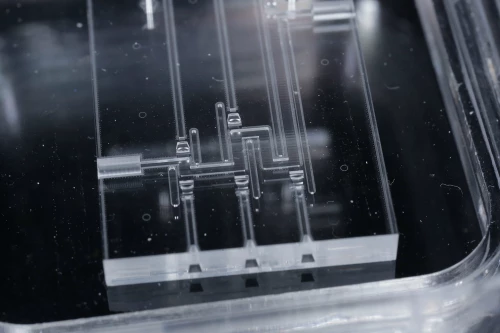
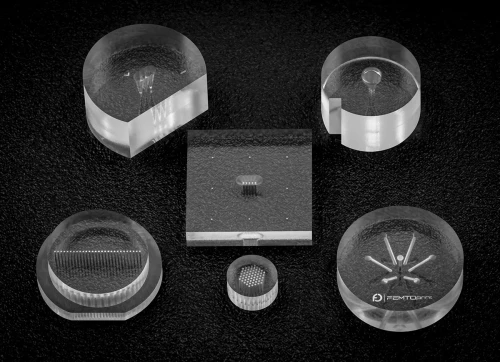
Selective Laser Etching is a two-step glass microfabrication process. A femtosecond laser writes a 3D pattern inside the glass by locally changing how the material responds to a chemical etch; a wet etch then removes only the written regions. The result is true 3D free-form geometry in fused silica or borosilicate, including channels, holes and shapes that subtractive milling or molding can't reach, produced from a digital file with no tooling to wear out between lots.
Which industries need single-source glass microfabrication?
Anywhere a glass micro-part has to be both precise and repeatable at volume. The biggest pull right now comes from photonics and telecom, optical connectors and co-packaged optics (CPO) for AI datacenters, where coupling tolerances are unforgiving and unit counts run into the hundreds of thousands per year. Beyond that: life sciences microfluidics, medtech, semiconductors and MEMS, quantum computing hardware, watchmaking and luxury, and space and defense. Different specs, same underlying requirement, hold the geometry, lot after lot, from one accountable source.
TALK WITH OUR EXPERTS ABOUT YOUR PROJECT
Is single-source micro-fabrication more expensive than a multi-vendor chain?
Per-unit, not necessarily. Across a program it's usually cheaper, because a single non-drifting process removes the re-qualification, scrap and second-sourcing costs that a fragmented chain quietly generates.
Can the same tolerances be held at high volume?
Yes. Because the geometry and process parameters are fixed in a digital recipe, the same XY ±1 µm / Z ±2 µm tolerances and Sa <10 nm surface finish that appear on a prototype hold at wafer-scale production, up to 300 mm.
Which certifications matter for regulated micro-fabrication?
For medtech and life sciences, ISO 13485 is the baseline; ISO 9001 covers the broader quality system. FEMTOPRINT holds both, applied across the same facility that fabricates the parts, so the traceability is genuine rather than assembled from subcontractor records.
What glass substrates can be processed?
Fused silica and borosilicate, including Borofloat® 33, in thicknesses up to 30 mm and at wafer scale up to 300 mm. Other materials or geometries are assessed through a feasibility review.