In the high-stakes arena of analytical chemistry, the barrier to the next breakthrough isn't always the sensor; it’s the architecture of the interface.
A recent study published in Analytical Chemistry has cast a spotlight on a paradigm shift: the integration of Ion Mobility Spectrometry (IMS) with advanced droplet microfluidics, made possible by a leap in manufacturing geometry.
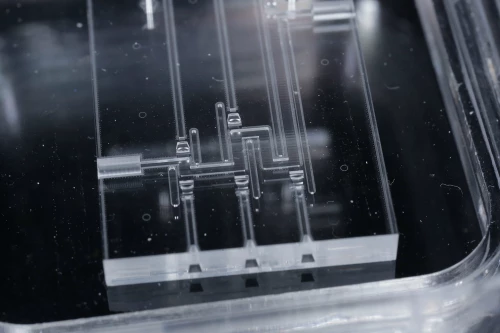
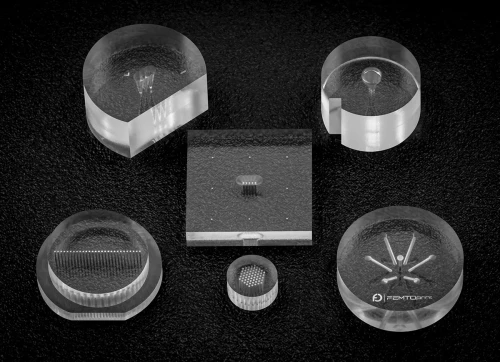
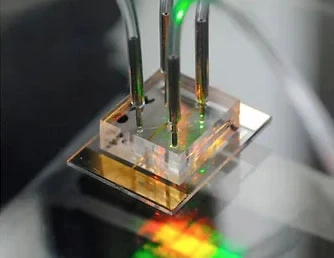
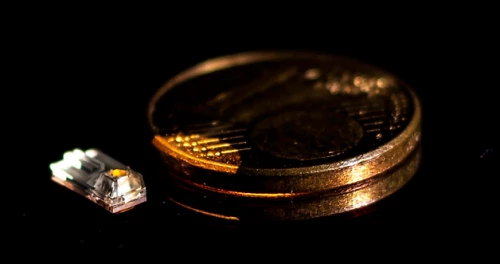
At the heart of this innovation lies a microfluidic chip that defies traditional constraints, crafted by FEMTOPRINT through True 3D glass microfabrication in fused silica.
Beyond the Planar Glass Ceiling
For decades, microfluidics has been tethered to "planar" thinking—layered designs that, while functional, introduce risks of misalignment, dead volumes, and structural fragility.
True 3D architecture changes the calculus. By engineering fully three-dimensional internal pathways within a monolithic fused silica substrate, we are no longer "stacking" components; we are sculpting fluidic intelligence.
Strategic Advantages for High-Performance IMS
The synergy between 3D glass and IMS drives performance in four critical dimensions:
The Verdict: Integration is the New Frontier
The evolution of IMS performance is now inextricably linked to the technology that delivers the sample. By removing geometric and material boundaries, True 3D glass fabrication expands the horizon of what can be coupled upstream of the spectrometer.
We aren't just building better chips, we are enabling a new era of sensitivity, throughput, and analytical precision.