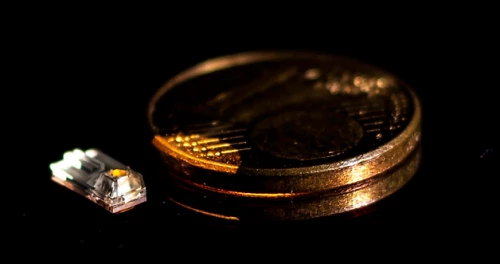
Behind the scenes in advanced research hubs across Europe and worldwide, engineers are facing a much more practical challenge: the packaging around quantum physics.
Quantum computers, atomic clocks, and quantum sensors are moving fast. But it makes you wonder: is the physics slowing us down, or is it the hardware holding it together?
Why Quantum Hardware Needs Perfect Packaging?
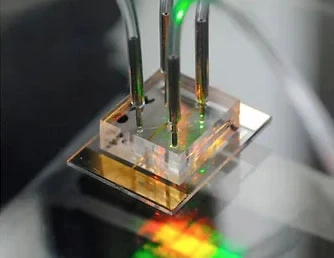
Atomic clocks, quantum sensors, and quantum computers all rely on something that sounds simple but is incredibly hard to make: a clean, stable glass structure. This structure needs to hold ions and atoms perfectly confined in space.
If this housing isn't perfectly stable, the delicate quantum state collapses (decoherence). In short: the packaging isn't just a box; it is an active part of how well the quantum system performs.
The Monolithic Solution: FEMTOPRINT’s Femtosecond Laser Technology
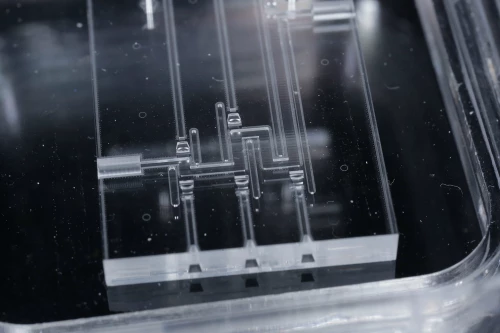
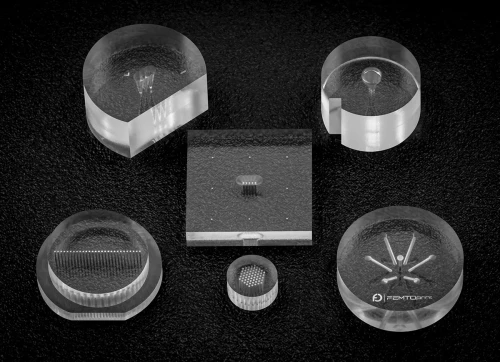
To overcome the limits of traditional manufacturing, Swiss-based FEMTOPRINT SA uses advanced femtosecond lasers to carve directly inside a single, solid piece of glass (a monolithic structure).
What is Femtosecond Laser Processing?
A femtosecond laser shoots ultra-short light pulses. Because the pulses are so fast, they modify the inside of the glass with sub-micron precision without creating destructive heat.
With this Swiss-engineered technology, FEMTOPRINT can carve:
This level of precision is exactly what helps a quantum setup leave the laboratory bench and become a real, market-ready instrument.
How does packaging affect quantum computing stability?
Quantum packaging must protect the system from temperature changes, vibrations, and electromagnetic noise. Monolithic glass structures (like fused silica) minimize thermal expansion. This keeps trapped ions perfectly in place, preventing data errors.
Why is glass used for ion traps and quantum sensors?
Glass offers excellent optical clarity for control lasers, great electrical insulation, and high thermal stability. This makes it the perfect material to maintain the ultra-high vacuum (UHV) conditions that quantum particles need to survive.
What are the benefits of femtosecond lasers over traditional micro-machining?
Unlike traditional methods, femtosecond lasers allow for rapid 3D prototyping without expensive molds or masks. It lets engineers create complex internal shapes inside a single piece of glass. This removes the need for glues or joints, which are weak points in quantum environments.
Ready to take your quantum setup out of the lab?
If you are building the next generation of atomic clocks or quantum sensors and need packaging that can match your physics, contact the micro-fabrication experts at FEMTOPRINT SA.